

Finally, a European Standard to guarantee the safety and reliability of cargo bikes
30 Jul 2026When you carry your children by bike, you want to be sure it is as safe and reliable as possible. Until now, there were no sufficiently comprehensive tests to guarantee that. With the new EN 17860 standard now in force, this has changed. So what does it actually bring to buyers, and how can it help you choose a safer, more reliable cargo bike?
What are standards for in the bike industry?
Standards are a set of tests and technical requirements that guarantee a bike’s safety, reliability, durability, and the reliability of its electrical system. They include braking tests, stability tests, fatigue tests, and component resistance tests.
They allow a manufacturer to have its product certified by an independent body, and allow customers to be confident in the quality of what they are buying. This is how we can be sure, for example, that a frame will not break prematurely from wear, or that a battery will not suddenly catch fire.
These certifications are not yet mandatory in every European country, including for the new EN 17860 standard. Some manufacturers may therefore choose not to apply them in order to reduce their development or production costs.
The limits of existing standards
For several years, two main standards have governed the European bicycle market:
- ISO 4210, which applies to conventional bicycles ;
- EN 15194, which applies to electrically assisted bicycles (e-bikes) and verifies the compliance of the electrical system in particular.
These standards were designed for standard use: a single cyclist riding without a significant load. They do not account for the specific constraints of cargo bikes, particularly the transport of heavy goods or multiple passengers.
It is impossible to guarantee a cargo bike’s compliance using the standards for a regular bicycle — they are simply not designed for it. New standards were needed : EN 17860 standard
EN 17860 : a European set of cargo bike standards
Discussions have been ongoing at the European level since 2017 to introduce a set of standards guaranteeing the safety and reliability of cargo bikes. They were based, among other things, on DIN 79010, a cargo-bike-specific standard developed in Germany.
These discussions eventually led to a set of standards known as EN 17860. It offers an unprecedented framework of reinforced tests, designed specifically for cargo bikes and harmonised across the European market. Among the additional tests it imposes:
- Specific tests for child transport — your child never stays perfectly still. This verifies that these unpredictable movements do not destabilise the bike.
- Braking tests performed with the bike loaded — the day you need to brake hard is never the day it is empty. It is with your two children, their school bags, and the evening’s groceries. This test ensures the bike stops predictably in that exact scenario, not only under the ideal conditions of an empty bike.
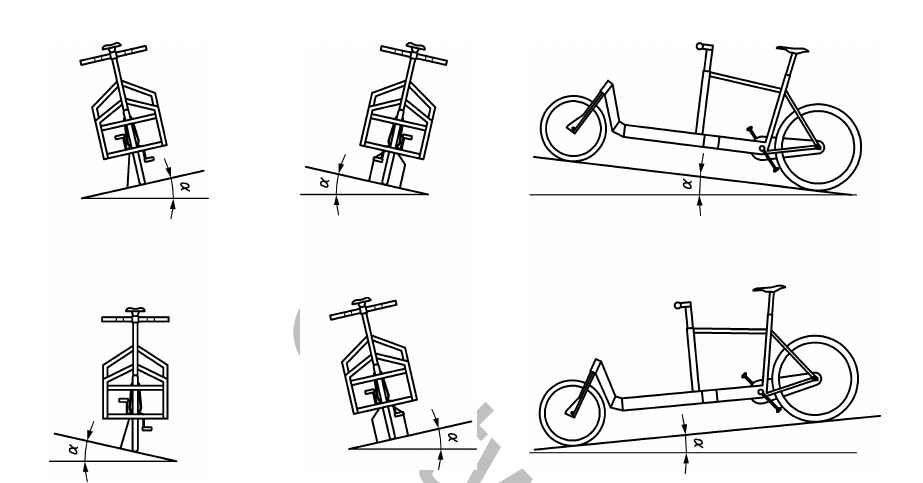
- Static and dynamic stability tests at maximum load — buckling in a child at the back while another is already seated at the front, kickstand resting on a slightly sloped pavement: that is exactly what static stability measures. And once under way, going round a roundabout or avoiding an obstacle with both children on board, that is where dynamic stability comes in.
- Frame and fork resistance tests under significantly higher stress — the pothole you don’t see in time, the slightly-too-high kerb you take a bit fast because you’re running late for school: with two children and their belongings on board, these repeated small shocks over several years are a real wear test for the frame. This test ensures the bike absorbs these everyday shocks without weakening its structure over time.
- Validation of the maximum payload announced by the manufacturer.
For buyers, this is a significant step forward. A cargo bike compliant with EN 17860 has been tested under conditions close to real-world use. This certification therefore provides additional guarantees in terms of safety, robustness, and reliability.
When buying a cargo bike, we strongly recommend checking not only its compliance with EN 15194 for the electrical side, but also its compliance with EN 17860 for the mechanical and structural aspects. The two standards are complementary: the first guarantees the safety of the electric assist system, while the second certifies that the bike is suited to carrying heavy loads and passengers.
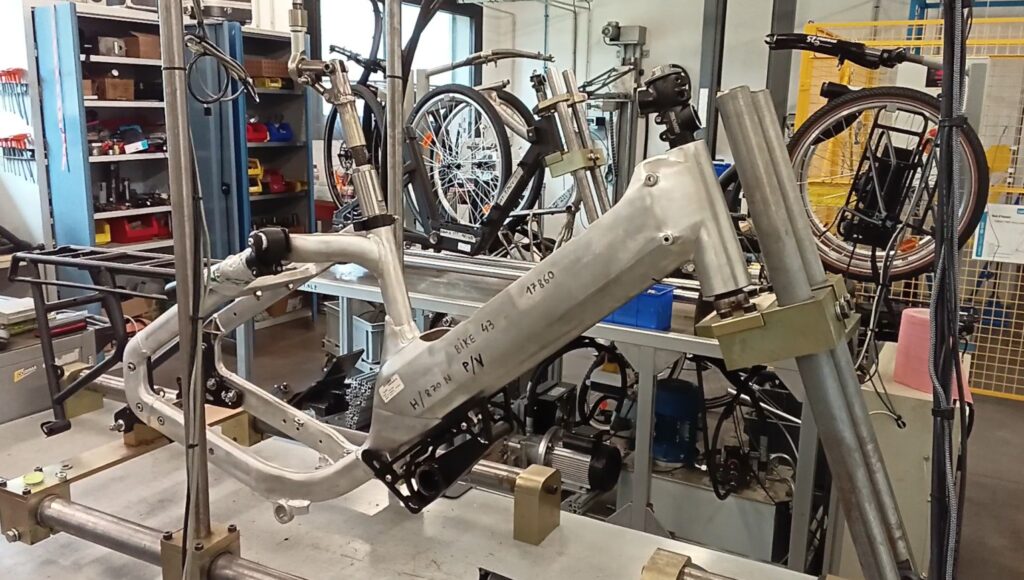
And at Bike 43 ?
At Bike 43, we defined our own requirements from the very start, reflecting the real-world use of our bikes. When the new European standard was introduced, we applied it directly to our longtails. They were already largely compliant, and only a few adjustments were needed. This new standard confirmed the quality of our bikes. It includes a large number of specific tests, too many to list exhaustively here — but here are a few significant examples:
Rear overhang length: a key factor for stability. A short rear overhang is necessary to prevent the front wheel from lifting when a passenger climbs on at the back. This dynamic stability test with a passenger does not exist in the ISO 4210 standard, even though it is essential for families.
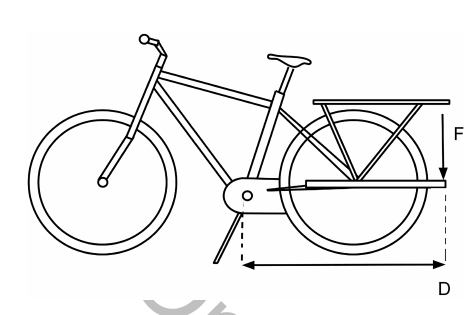
Likewise, the kickstand is subject to reinforced static stability criteria, absent from conventional standards.
The fork and steering assembly are subjected to stresses far greater than those of standard bikes. We carry out repeated braking tests (fatigue) as well as an ultimate braking test at maximum load, simulating emergency situations. Lateral impacts, such as against a kerb or a wall, are also reproduced to validate robustness. The forces applied to the fork can be more than double those required by ISO 4210.
The handlebar and stem are tested with forces comparable to those used for mountain bikes, including emergency braking while standing on the pedals.
The pedals and drivetrain are subjected to repeated pedalling cycles, with forces equivalent to those of mountain bikes, to ensure long-term durability.
The rear rack, a central component of any cargo bike, is tested for fatigue as well as at maximum load (up to three times the rated weight) — a requirement that goes well beyond existing standards.
The Speedlifter part we previously used, sourced from another brand, no longer met the new requirements. We therefore developed our own component, optimising load distribution and safety. This innovation reflects our commitment to going beyond minimum standards to offer a product genuinely suited to carrying children and heavy goods.
By choosing a Bike 43, you are choosing a bike built to withstand the most intensive use, well beyond legal requirements. While the EN 17860 standard sets a solid safety framework, we have pushed testing further on several critical points to guarantee absolute reliability. EN 17860 is a good starting point, but at Bike 43, safety and durability are permanent commitments, not a simple box to tick.
Ultimately, whether you choose a Bike 43 or not, get in touch with your dealer or manufacturer to find out whether the family bike you are interested in complies with the new standards. They may seem extreme, but they exist to guarantee your safety and that of your family — it’s probably the most important point of all.